
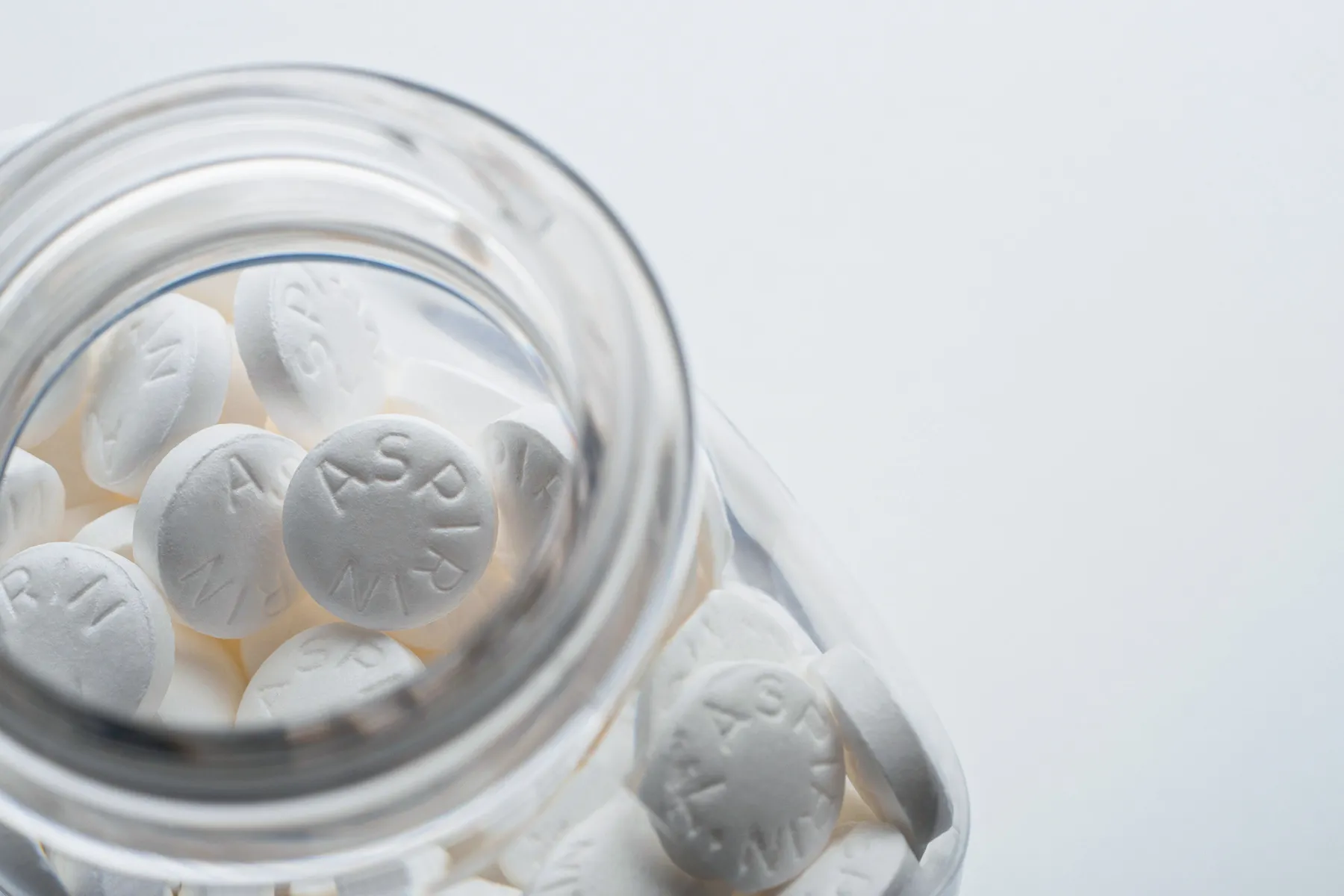
March 5, 2024 — There’s a widespread – and long-held — belief that swallowing a low-dose aspirin pill every day can help protect you from heart attacks and strokes.
Almost 30 million Americans take aspirin to prevent a first cardiovascular event (“primary prevention”), and nearly 40% of those over 50, around 49 million people, are taking aspirin either for primary prevention or for secondary prevention after they’ve had a stroke or a heart attack.
However, experts have begun to question aspirin’s effectiveness, prompting health care professionals to reevaluate the role of aspirin in primary prevention.
In 2019, the American College of Cardiology/American Heart Association primary prevention guideline, the most recent one available, said aspirin “should be used infrequently” in the routine primary prevention of a type of cardiovascular disease because of lack of net benefit.”
This recommendation was made after weighing the benefit of aspirin use in primary prevention against the risk of bleeding in the brain and the digestive tract. The results of three major clinical trials published in 2018 had a major influence on the guideline, said cardiologist John W. McEvoy, MBBCh, one of the guideline’s co-authors and a professor of preventive cardiology at the National University of Ireland in Galway.
“Our initial take on the evidence was that it didn’t support significant efficacy for aspirin in preventing heart disease and stroke and that the risk of bleeding probably outbalanced the benefit,” he said.
On the other hand, McEvoy said, the guideline also says that “every patient needs to have an individualized decision on aspirin. It’s not one size fits all. We didn’t say not to give aspirin to anyone because we felt there were some high-risk patients who might benefit.”
Age-Based Recommendations
The United States Preventive Services Task Force, a nongovernmental advisory group, has also weighed in on the role of aspirin in primary prevention. In 2022, the task force updated its 2016 recommendation after a systematic review of the evidence. The group said aspirin use has a “small net benefit” for primary prevention of cardiovascular events, but only in adults aged 40-59 who have a 10% or greater risk of a cardiovascular event within 10 years. It recommended against adults 60 years or older taking aspirin, saying “it has no net benefit.”
Explaining its advice for older people, the the task force said the aspirin-related risk of gastrointestinal or brain bleeding, and stroke increases with age.
Not many studies have been done on the risk-benefit question of aspirin use in older adults. But a secondary analysis of data from one of the 2018 studies that were crucial in the American College of Cardiology/American Heart Association guideline indicates that the risk of brain bleeding is significant in people over 70, while there is no benefit of aspirin for primary prevention of stroke in this population.
All of the 19,114 participants in the study, conducted in Australia and the U.S., were healthy people with a median age of 74. Half of them got aspirin, and the other half got a placebo.
Aspirin didn’t produce a statistically significant reduction in the rate of ischemic stroke (the most common kind). But there was a significant increase in bleeding in the brain among those taking aspirin compared to those getting the placebo.
Lead author John J. McNeil, PhD, professor of epidemiology and preventive medicine at Monash University in Melbourne, Australia, said both brain bleeds and hemorrhagic strokes were more frequent in the aspirin group, and that the frequency of falls among older people increased the probability of these events.
“Most of these hemorrhages occur in people who fall and bang their heads, and we speculated that many of those people hit their head when they fall,” he said.
Reduced Risk of CVD
The original studies on the benefits of aspirin in primary and second prevention of cardiovascular were done several decades ago. Today, the effectiveness of aspirin may have declined because some risk factors are better controlled than they once were, said Anum Saeed, MD, assistant professor of medicine at the University of Pittsburgh School of Medicine and a cardiologist at UPMC Heart and Vascular Institute. For example, she said, we now have statin drugs to reduce LDL cholesterol (the bad kind) and effective medications to lower blood pressure.
Saeed carefully weighs the risk factors of patients before starting them on aspirin for primary prevention. Among those who she would advise to take aspirin, she said, are people with high amounts of calcium in the coronary artery, people who have diabetes, and patients who have high LDL cholesterol.
However, she advises people to control their risk factors before starting to take aspirin, she added. She recommends that they reduce their blood pressure and cholesterol, exercise regularly, and improve their diet, among other things.
If they have no risk factors for cardiovascular disease, she won’t put them on aspirin. If they’re over 70, have significant risk factors, and have been taking aspirin for some time with no problems, she recommends that they continue taking it. But she keeps a close eye on these patients, making sure they’re not at risk for falls, for example.
McEvoy, likewise, tries to get patients’ risk factors under control before discussing aspirin with them. If their risk of CVD is low, he’ll tell them they don’t need aspirin. With people over 70, he highlights the risks of aspirin to a greater extent.
Discontinuing Aspirin May Pose Risks
Should older people who have been on aspirin for years continue taking it for primary prevention? That’s a surprisingly difficult question to answer.
In a recent paper, McEvoy and his colleagues tried to solve the question by examining combined data from the 2018 aspirin trials. What they found is that, of the 15% of study participants who were taking aspirin before the trial, fewer of those who kept taking it during the study had heart attacks or strokes than of those who received a placebo instead.
A couple of observational studies had similar results, leading McEvoy to believe that people who take aspirin for primary prevention and then discontinue it are at slightly higher risk of cardiovascular events than those who keep taking it.
Nevertheless, he always discusses the pros and cons of continuing aspirin use with his older patients.
“There are patients who have been taking aspirin for years and who have never had a problem with aspirin. They don’t have any history of dyspepsia or GI bleeding, and don’t have risk factors for bleeding in terms of falls or use of other medications that can increase risk.”
Before he has these patients stop taking aspirin, he talks to them.
“I say, ‘There’s mixed evidence. As you get older, the risk of bleeding will become higher, but we also know that aspirin can reduce nonfatal cardiovascular disease,’” he said.
Some patients feel strongly about their risk of heart disease or stroke to the point they worry about that over the bleeding risk. “In those patients, I don’t necessarily stop aspirin,” McEvoy said. “But I do weigh the risk factors, and if they have other risk factors, I tell them that aspirin may not be necessary.”