
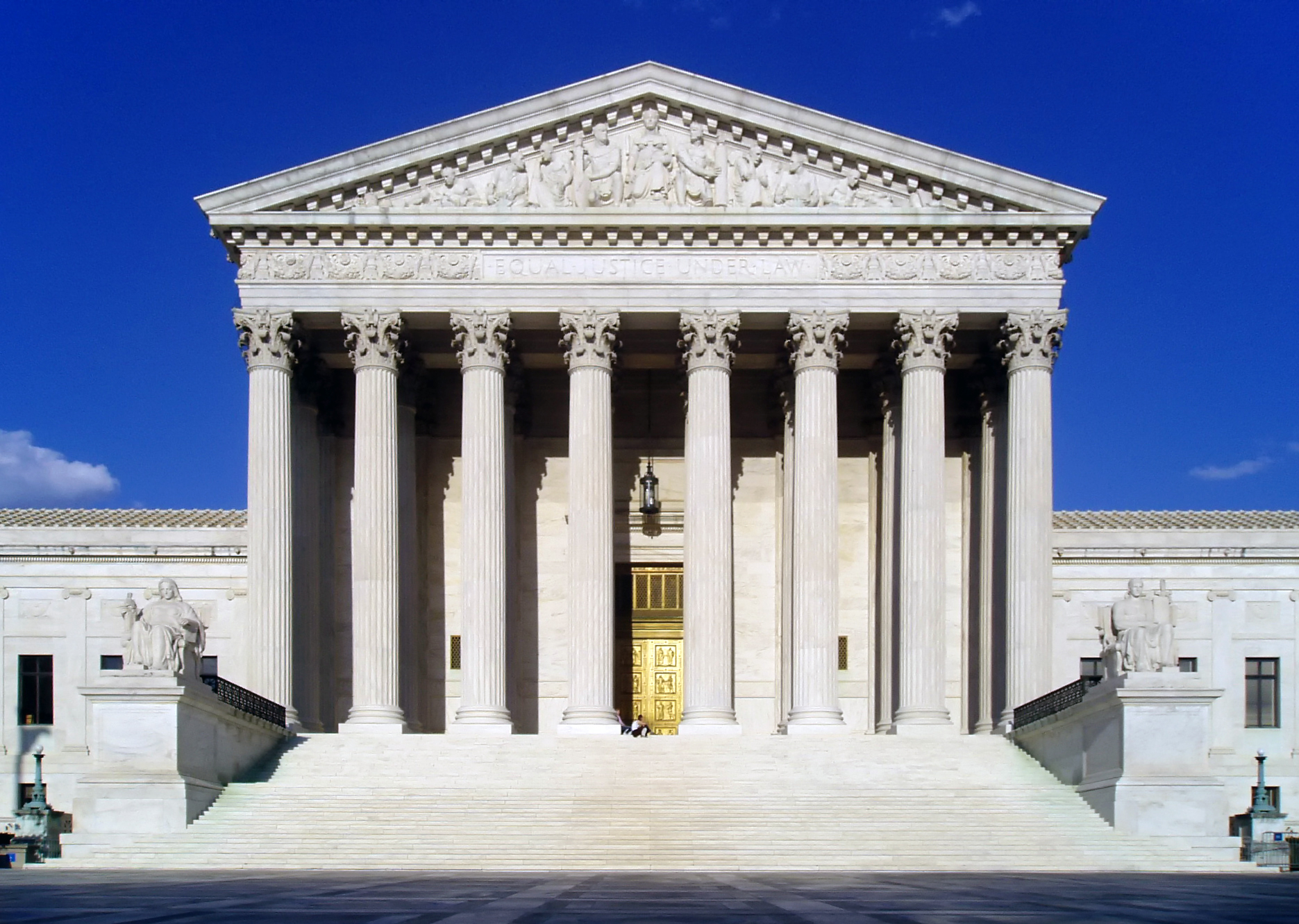
Yesterday, the Supreme Court handed down three major cases with unanimous decisions. One, Ames v. Ohio Department of Youth Services, raises additional questions over diversity, equity, and inclusion (DEI) programs that have been widely used in higher education and businesses. There is no reason to believe that DEI measures are DOA, but the decision is likely to accelerate challenges based reverse discrimination after the Court rejected the imposition of an added burden for members of any “majority group” including straight, white males.
The immediate question before the Court was a circuit split over the standard that applies to a member of a “majority” group who claims that he or she was treated unfairly based on majority characteristics. The Sixth Circuit, along with four other circuits, held that such litigants must shoulder additional pleading burdens under Title VII of the Civil Rights Act.
Many of us long argued that this long-standing rule was itself discriminatory and at odds with both constitutional and statutory authority. It was a bizarre interpretation of a law that barred employees from discriminating based on “race, color, religion, sex, and national origin.” That would ordinarily require a plaintiff to support a claim of disparate treatment by showing that she applied for a position for which she was qualified but was rejected under circumstances giving rise to an inference of unlawful discrimination. However, judges began to add their own burden of white, male or straight litigants in requiring them to show additional “background circumstances” that show the defendant is an “unusual employer” that discriminates against majority groups.
In this case, Marlean Ames, a heterosexual woman, claimed that she was demoted at the Ohio Department of Youth Services after Ginine Trim, a gay woman, replaced her supervisor. Trim hired a younger gay man allegedly based on her sexual orientation and sex. Both the district court and the Sixth Circuit dismissed the complaint because Ames failed to identify any other “background circumstances” that demonstrated her employer discriminated against heterosexual women.
“As a textual matter, Title VII’s disparate-treatment provision draws no distinctions between majority-group plaintiffs and minority-group plaintiffs. Rather, the provision makes it unlawful “to fail or refuse to hire or to discharge any individual, or otherwise to discriminate against any individual with respect to his compensation, terms, conditions, or privileges of employment, because of such individual’s race, color, religion, sex, or national origin.” The “law’s focus on individuals rather than groups [is] anything but academic.” Bostock v. Clayton County (2020). By establishing the same protections for every “individual”—without regard to that individual’s membership in a minority or majority group—Congress left no room for courts to impose special requirements on majority-group plaintiffs alone.”
Justice Thomas, joined by Justice Gorsuch, filed a concurrence that chastised lower courts and “judges creating atextual legal rules and frameworks.”
The opinion has broader implications for businesses and higher education where DEI has been used to brush aside such reverse discrimination claims. Often such claims are mocked as suggesting that members of a majority group are “victims.” While not imposing this specific “add-on,” these controversies involve much of the same bias against reverse discrimination claims. Litigants complain that they often face greater demand and resistance to their claims as opposed to employees who are part of minority groups.
The Ames decision is a welcome development in bringing greater uniformity in the treatment of discrimination claims. It is also a shot across the bow of businesses and universities that have used DEI to dismiss the countervailing interests and claims of majority-group employees.
Here is the decision: Ames v. Ohio Dep’t of Youth Services