
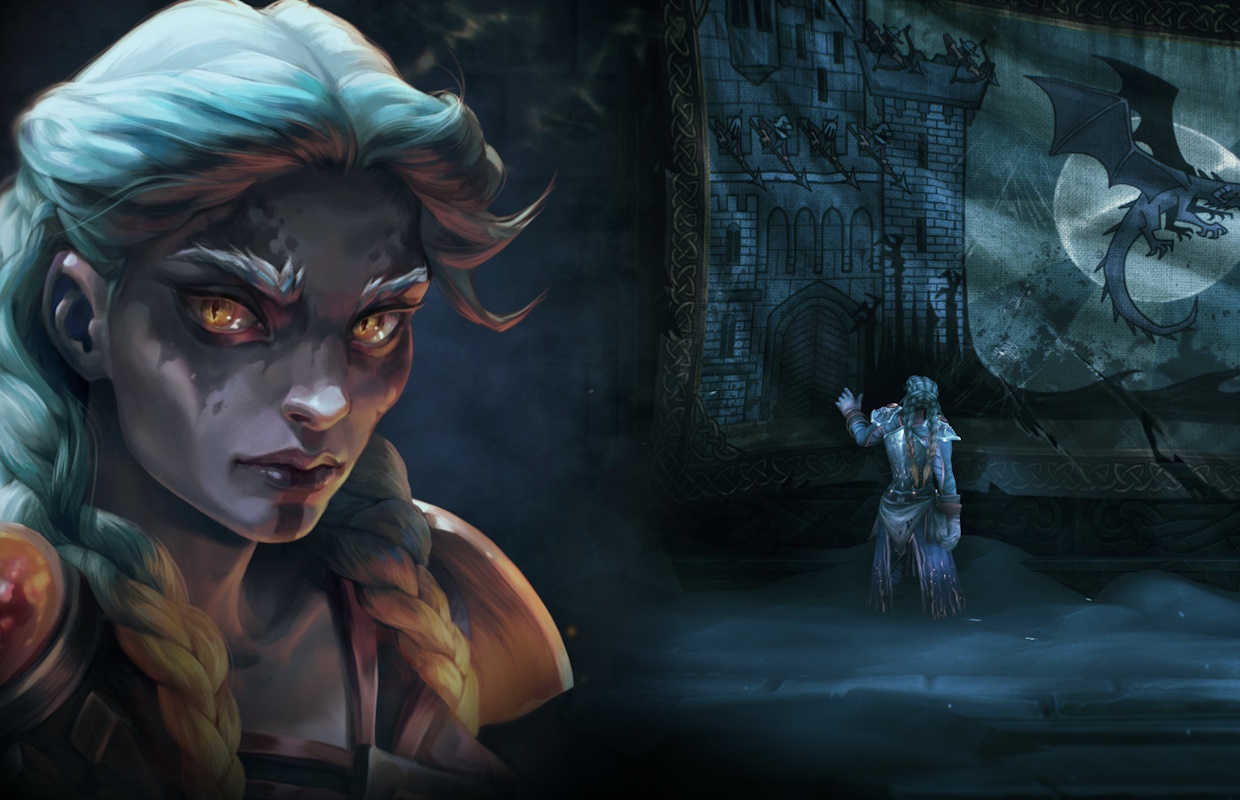
Mandragora: Whispers of the Witch Tree combines two sub-genres that are quite well-worn today: search action ‘Metroidvania’ and ‘Soulslike’. Even if you don’t know anything else about Mandragora, assuming you are familiar with those genres, you probably already have a halfway-decent idea of what to expect with those two comparisons alone.
Advertisement. Keep scrolling for more
Despite the overly simple genre slotting, I had been interested in checking out Mandragora for a while. A dark fairytale fantasy from a small Hungarian studio seemed like it could be a cool curiosity. I was hoping for a mixture of enjoyable action RPG combat with satisfying exploration and a touch of magic weirdness. Unfortunately, I come away mostly apathetic with a game that is decent, but unremarkable.
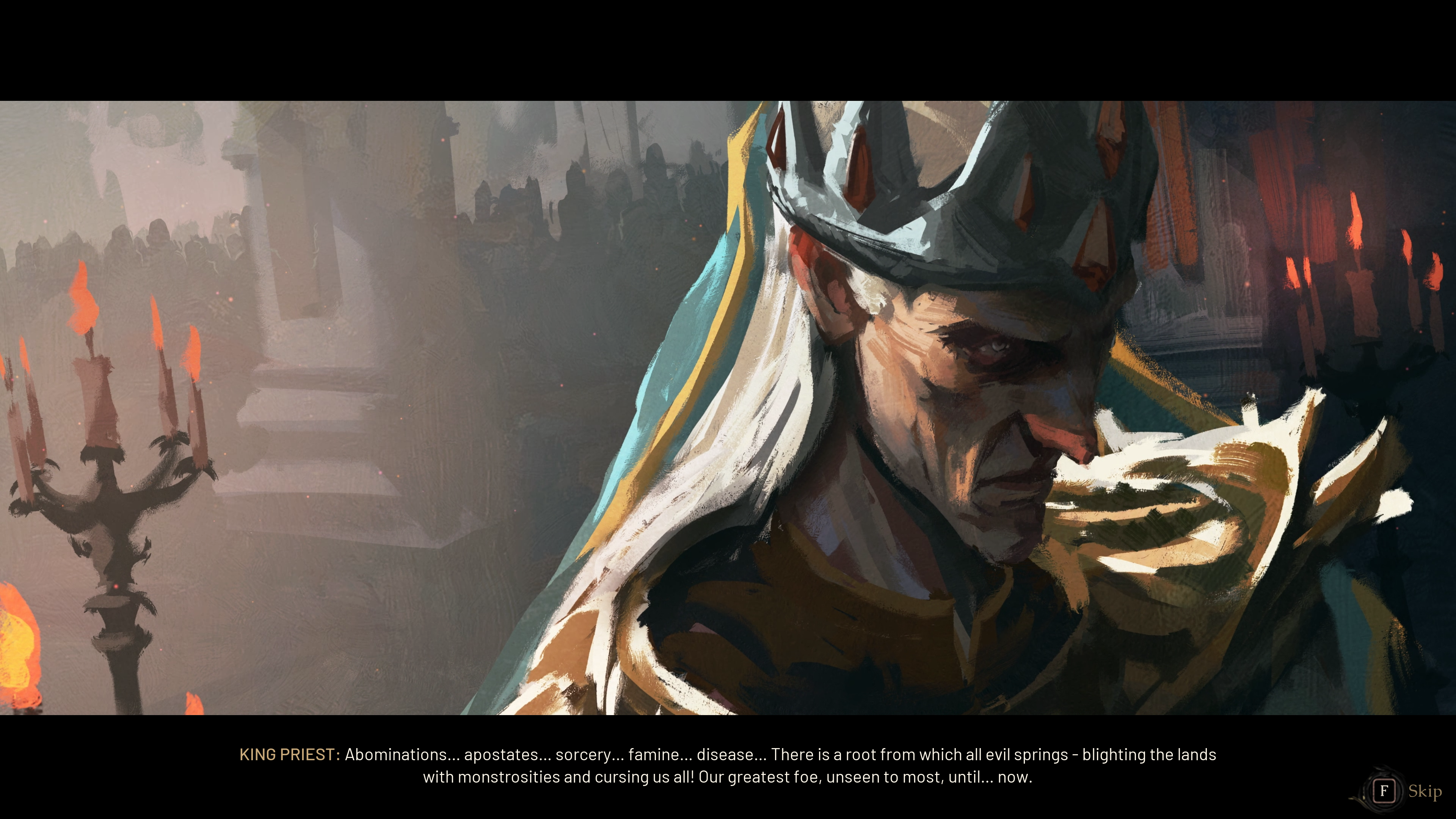
The starting premise of Mandragora is relatively straightforward. You are an Inquistor of Faelduum who is possessed by a witch during an execution gone awry. You then set off to find a different witch to prove your loyalty to the kingdom, kicking off an odyssey that, naturally, will shape the future of the land.
Like its Souls inspirations, Mandragora does not have a very overt front-to-back narrative. Instead, you’ll meet the scarce NPC who will exchange a few lines of dialogue, here and there, clueing you in on the state of the world, their place in it, and maybe some history about the region you are about to explore. Like much of Mandragora, the narrative on display is adequate but not noteworthy, as you learn about the Witches, your kingdom, and a mysterious essence known as Entropy. The game’s story mostly serves as a vehicle for exploration and combat.
Some of the NPCs that you meet will join your ‘camp’ that you establish, acting primarily as merchants and artisans. There’s Ulfar the Blacksmith, who can craft weapons and armor. There’s Alannah the Alchemist, who can make all sorts of potions. There’s Gerald the Explorer, who can help you fill out your map. Later on, these NPCs will become crucial allies when it comes to preparing yourself for the challenges that await. I should mention that I do like the oil-painting-like portraits quite a bit.
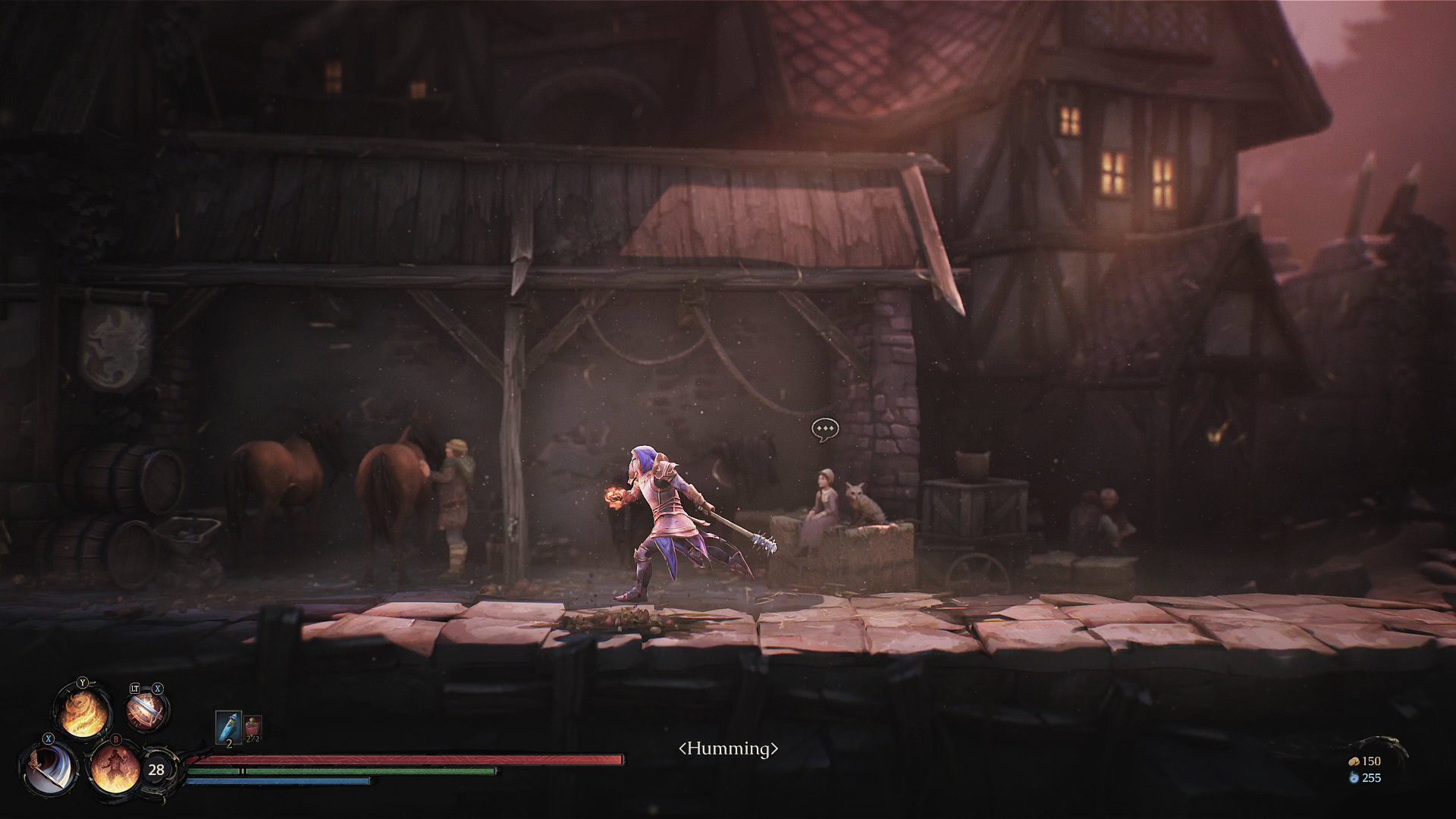
Especially in the first half of the game, the pacing, balance, and variety of Mandragora’s combat never felt quite right to me. You start with only a few basic weapon attacks and a dodge roll, so most battle encounters consist of a few simple swings, a dodge to avoid a clearly-telegraphed counterattack, followed by a few more swings, and probably another dodge. Not only is the pace of combat relatively slow, but most of the threats in your path are essentially taken on in the same basic fashion.
Early on, most enemies felt as if they needed three hits too many to take down, dragging out each individual encounter while also weakening the tempo of the game. But even entering the game’s back half, gameplay variety just wasn’t there, and I felt myself getting bored with the combat. A few slightly-different active skills weren’t enough to shake up the tedium of Mandragora’s sluggish pace, limited enemy variety, and ordinary level design. The game does have some modifiers that you are free to adjust (to some degree) in the menu, including enemy damage and stamina costs, which is a welcome accessibility option.
Advertisement. Keep scrolling for more
I think I might have picked the wrong base class. Mandragora has six starting classes to choose from, including a nimble Assassin or a spell-slinging mage. I decided to play as the Vanguard, a sword-&-shield wielding paladin of sorts who attacks primarily with deliberate swings between the occasional shield block. While this game’s skill trees let you multi-class to some degree, I wanted to see if Vanguard’s later skills would be worthwhile, so I continued down that path for the majority of my playthrough. It’s very possible that a different class selection or a different weapon choice would lead to a considerably different gameplay feel than my own experience.
One of Mandragora’s most egregious missteps is in its boss variety and design. Many of the bosses you’ll find are simply bigger versions of normal enemies that you’ve fought hundreds of times, such as a bigger rat (you defeat like six of these things), or a bigger spider. You’ll fight 3 or 4 Giants as well as 3 or 4 zombie warriors. Some of the major storyline bosses manage to stay unique, such as the Necromancer or Marionette, but these end up being the exception.
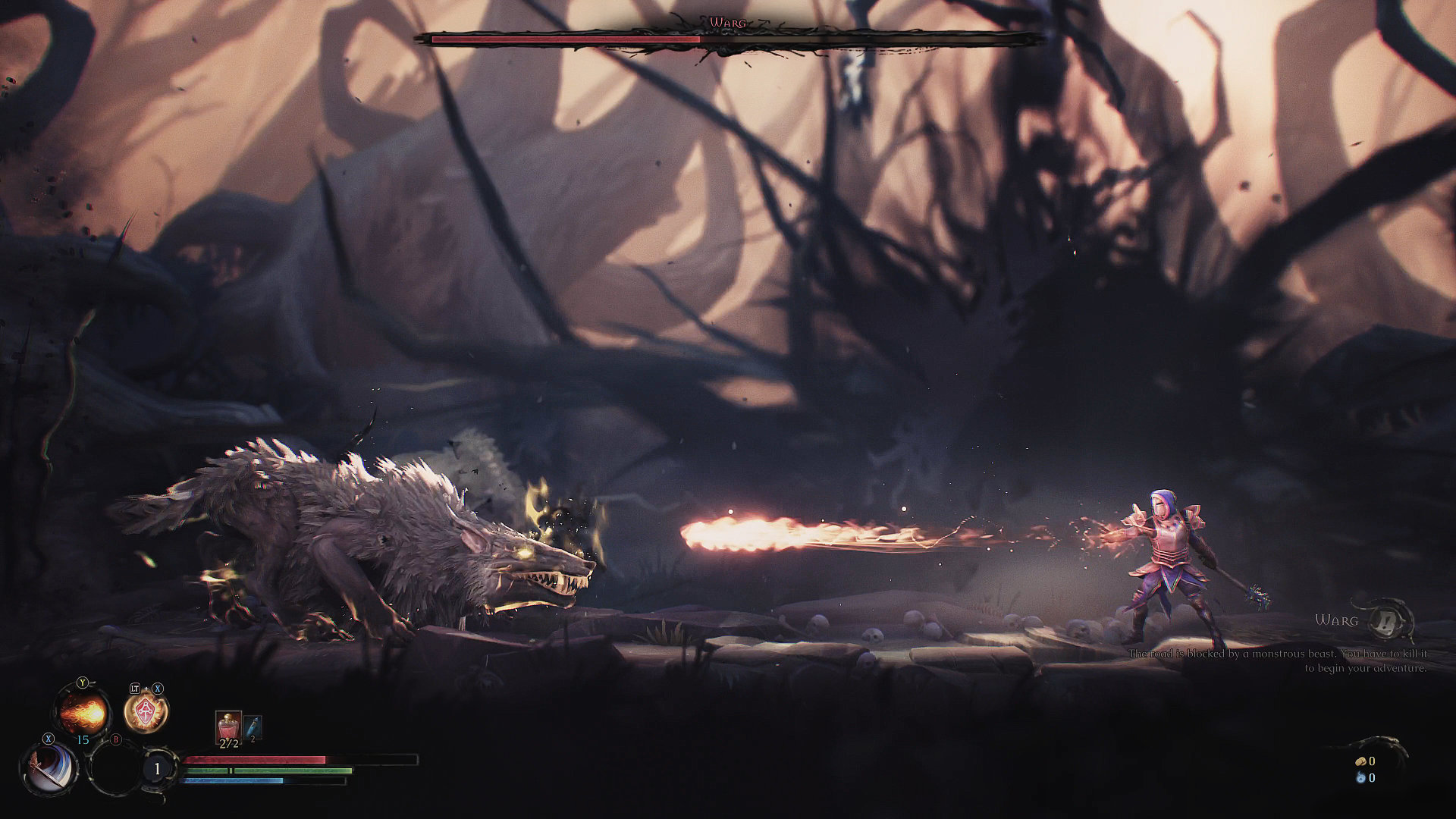
Much like the story and the combat, Mandragora’s world design is also, simply, passable. You’ll see the usual search action elements of unreachable areas that need a traversal upgrade to get to. You do eventually get a double jump and a glide ability, although you’ll be near the end of the game when you finally get these upgrades. Many of the game’s zones are straight lines, with ladders or elevators to other straight lines. Most of the rewards for backtracking and exploration are diagrams that you use to craft new equipment back at camp.
Speaking of, those camp artisans I mentioned earlier? By the time you reach the final sections of the game, you’ll want to collect higher-quality weapons and equipment to take on the final foes. To do this, you’ll need to level up your various artisans to obtain these, but the resource requirements to do this are frankly ridiculous. The amount of money and number of item drops you need is far more than what you would naturally obtain during normal gameplay. It all seems extremely far out of tune, as if the game expects you to aimlessly wander back-and-forth, over-and-over, excessively killing and re-killing harmless enemy fodder. It feels as if the developers didn’t know what sort of resources you would have by this point in the game, so they guessed, but severely overestimated.
It’s unfortunate that the day after I completed Mandragora, developer Primal Game Studio released a significant patch with numerous balance adjustments, including enemy stats, skill costs, crafting requirements, and drop rates. Evidently, they’ve heard feedback similar to mine and are actively fine-tuning the game to address those criticisms, which is admirable. It’s possible that, should I revisit this review a few months from now, many of my qualms will have been ironed out significantly. I can only review what I personally experienced, however.
On paper, Mandragora has a lot of components that may sound appealing to a wide variety of players. It has numerous side-quests with worthwhile rewards. It has plenty of secrets to find, including hidden rooms and optional bosses. It has considerable flexibility in character build options and weapon types. But it all feels perfunctory at best, satisfying a checklist requirement but failing to achieve anything more than ordinary.
I struggle to pinpoint any particular facet of Mandragora: Whispers of the Witch Tree that is exceptional. The combat is serviceable, the narrative is adequate, and the exploration is fine. There’s some comfort in navigating the map & finding new secrets in a way that search action games tend to be comfortable, and there’s some satisfaction in the gameplay in which soulslike games tend to be satisfying, but I’m mostly left with indifference.
6