
Working With an RF Board
RF boards are used in many different applications, from handheld wireless devices for communications to industrial and medical equipment. The circuitry inside these boards must be designed carefully to accommodate high frequencies, which can cause interference or other problems if they are not handled properly. These challenges can be overcome by following the right design guidelines and using specialized tools and techniques.
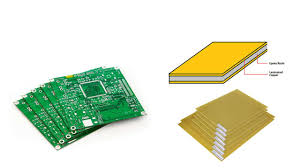
The most important aspect of rf board design is selecting the right materials. These must be able to handle the high frequencies without losing signal quality or being prone to heat generation. They should also have a low dielectric constant and dissipation factor to keep the board cool and stable. Other factors include the material’s cost, stability over a wide frequency range, and moisture absorption. FR-4, PTFE, and Rogers material are common choices for RF boards, as they offer a good balance of performance and price.
Another key concern is impedance matching, which ensures that the signals travel from one component to another smoothly and do not get distorted. This is accomplished by adding impedance-matching circuits or adjusting trace widths. It is also crucial to avoid any gaps in the circuit, as they can interfere with the signals. Finally, it is important to use a ground plane and power planes in the RF section of the circuit board. These provide a return path for the current and help mitigate EMI and reduce crosstalk.
Safety Considerations When Working With an RF Board
Once the RF PCB is designed, it must be fabricated. This process involves placing the components on the board and soldering them into place. For RF boards, special processes like reflow soldering must be employed to ensure a precise and reliable connection between the components and the traces.
While there are several steps to the RF PCB fabrication process, the final step is testing and debugging. This is when the designer uses tools like network analyzers and oscilloscopes to verify that the circuit works as expected. Once the board is finished, it is ready to be shipped for assembly.
There are a few safety considerations to keep in mind when working with an RF board. First, make sure to wear appropriate safety equipment, such as a face mask and ear protection. It is also important to understand how RF signals are transmitted and how they can affect the human body. RF boards generate high levels of electromagnetic radiation, which can cause hearing loss and other health problems.
The RF circuit board is an essential part of modern mobile technology, and it can be used in a variety of industries. It is important to take the time to learn about RF engineering and PCB design so that you can build high-quality, efficient, and reliable products. By following these tips, you can create a durable RF circuit board that will meet all your requirements. With proper care and maintenance, you can use your RF circuit boards for years to come.